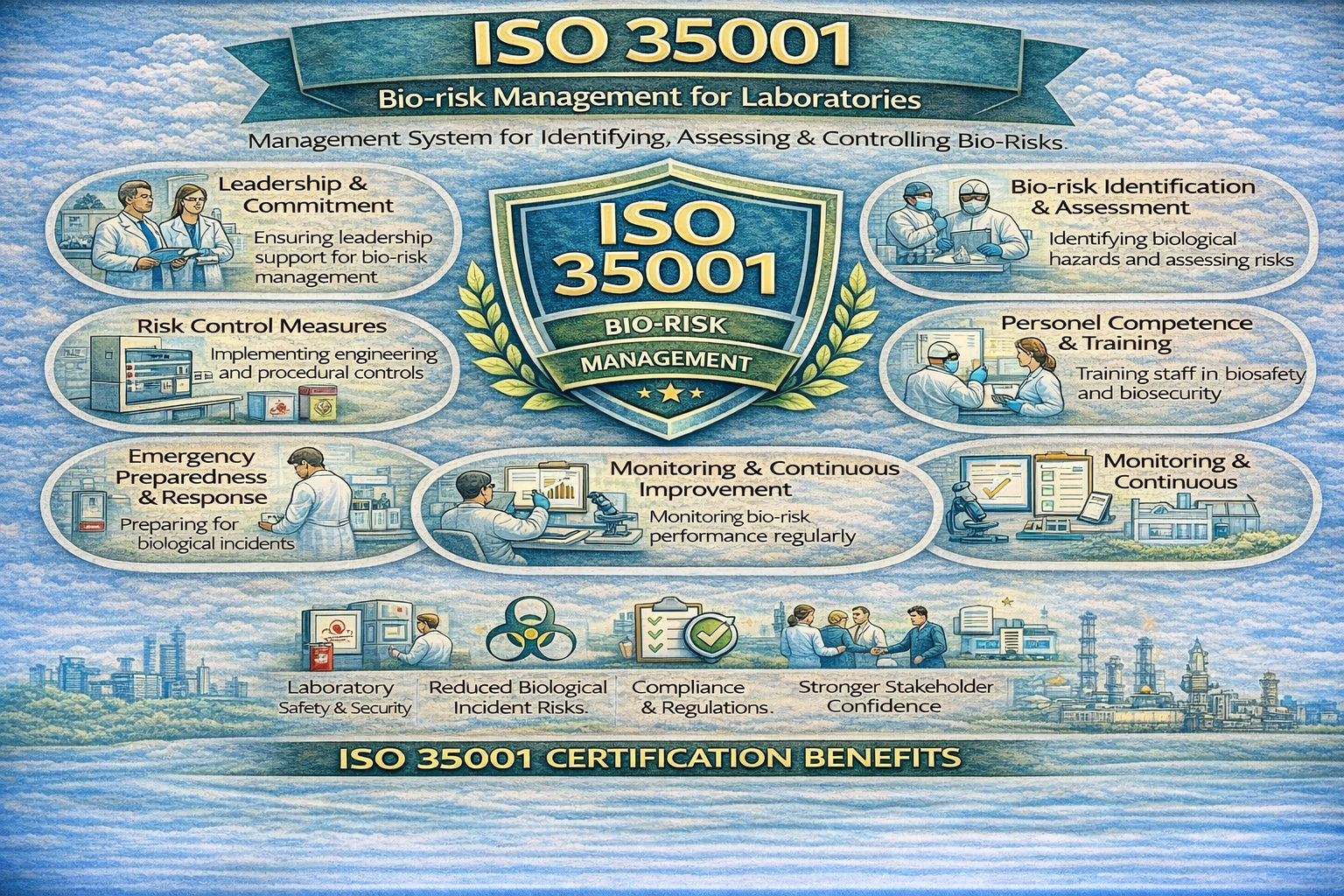
ISO 35001 – Bio-risk Management System
What is ISO 35001 Certification?
ISO 35001 certification is an international standard that specifies requirements for a Bio-risk Management System. It is designed for laboratories and related organizations that work with biological agents, toxins, and biological materials that may pose risks to people, animals, or the environment.
ISO 35001 provides a structured approach to identifying, assessing, controlling, and monitoring bio-risks to ensure safe and secure laboratory operations. The standard is applicable to clinical laboratories, research facilities, pharmaceutical companies, biotechnology organizations, and any entity handling biological hazards.
Importance of ISO 35001 Bio-risk Management System
Laboratories face serious risks related to accidental exposure, contamination, misuse, or release of biological agents. The ISO 35001 bio-risk management system helps organizations proactively manage these risks in a controlled and systematic manner.
Key objectives of ISO 35001 include:
-
Protecting laboratory personnel and visitors
-
Preventing biological incidents and accidents
-
Ensuring biosafety and biosecurity
-
Complying with regulatory and ethical requirements
-
Strengthening public and environmental protection
ISO 35001 supports a strong safety culture in laboratory environments.
Scope of Laboratory Bio-risk Management ISO 35001
Laboratory bio-risk management ISO 35001 applies to:
-
Medical and clinical laboratories
-
Research and academic laboratories
-
Pharmaceutical and biotechnology companies
-
Diagnostic and testing facilities
-
Healthcare and public health laboratories
The standard covers both biosafety (accidental risks) and biosecurity (intentional misuse).
ISO 35001 Requirements
Understanding ISO 35001 requirements is essential for effective implementation. Key requirements include:
1. Leadership & Commitment
Top management must demonstrate commitment to bio-risk management and provide adequate resources.
2. Bio-risk Identification & Assessment
Organizations must identify biological hazards and assess risks related to exposure, misuse, or release.
3. Risk Control Measures
Appropriate engineering, administrative, and procedural controls must be implemented.
4. Personnel Competence & Training
Laboratory staff must be trained in biosafety, biosecurity, and emergency response.
5. Emergency Preparedness & Response
Plans must be in place to respond to biological incidents or emergencies.
6. Monitoring & Continuous Improvement
Bio-risk performance must be monitored and improved regularly.
ISO 35001 Implementation Process
-
Bio-risk gap analysis
-
Hazard identification and risk assessment
-
Development of bio-risk controls and SOPs
-
Training and awareness programs
-
Monitoring and internal audits
-
Certification assessment
Benefits of ISO 35001
-
Improved laboratory safety and security
-
Reduced biological incident risks
-
Strong regulatory and stakeholder confidence
-
Enhanced organizational credibility
-
Safer working environment
FAQs – ISO 35001
-
What is ISO 35001?
A standard for managing biological risks in laboratories and related organizations. -
Is ISO 35001 mandatory?
Not mandatory, but strongly recommended for labs handling bio-hazards. -
Who should implement ISO 35001?
Any organization working with biological materials. -
Does ISO 35001 cover biosecurity?
Yes, it covers both biosafety and biosecurity. -
How long does certification take?
Usually 2–4 months.