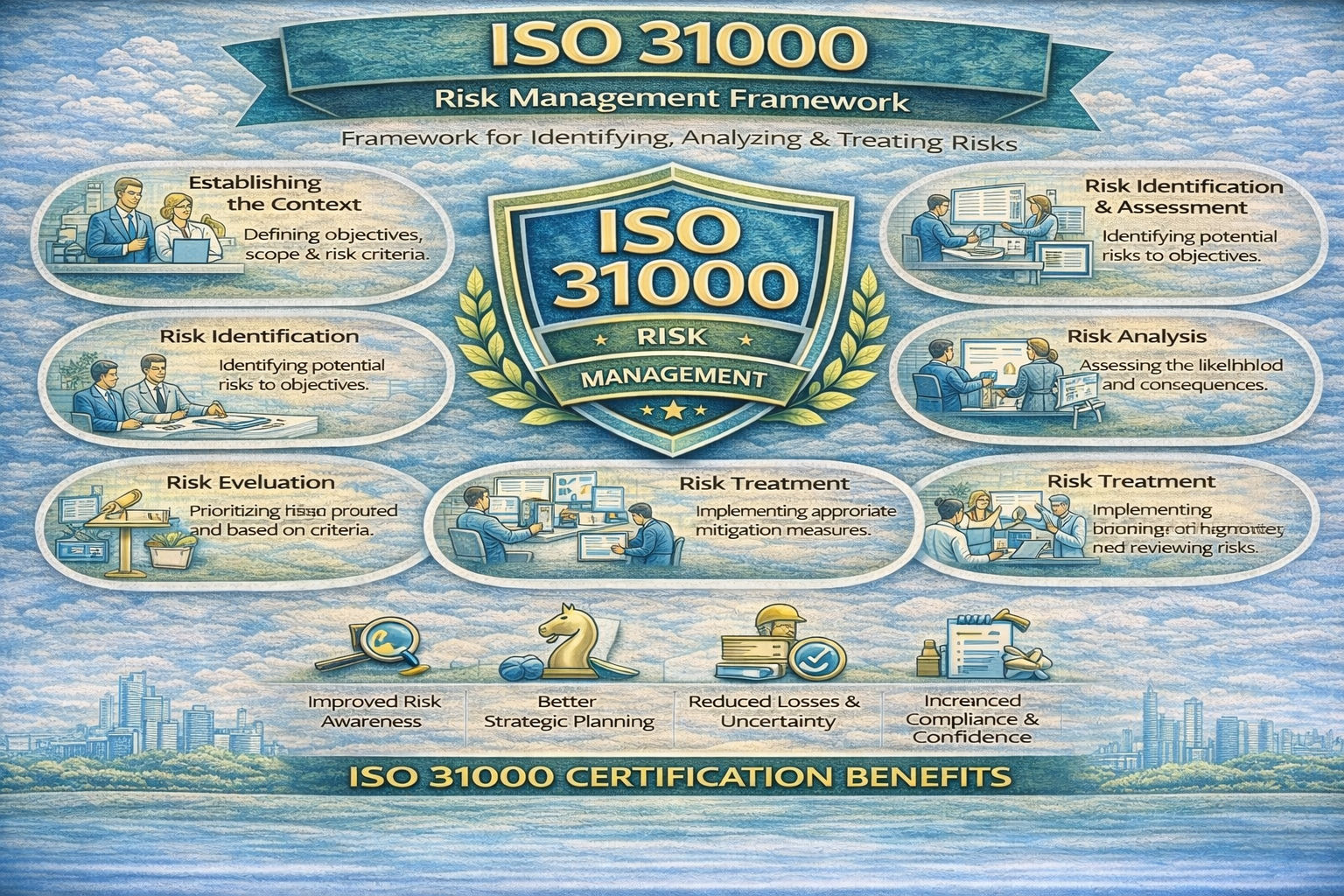
ISO 31000 – Risk Management Framework
What is ISO 31000?
ISO 31000 is an internationally recognized standard that provides principles, a framework, and a process for effective risk management. It helps organizations systematically identify, analyze, evaluate, and treat risks that may affect objectives, performance, or reputation.
Unlike certifiable management system standards, ISO 31000 is a guidance framework, widely adopted across industries for enterprise risk management (ERM).
Importance of ISO 31000 Risk Management System
All organizations face uncertainty and risks—strategic, operational, financial, legal, and reputational. The ISO 31000 risk management system helps organizations make informed decisions and improve resilience.
Key objectives include:
-
Proactive risk identification
-
Improved decision-making
-
Reduced losses and disruptions
-
Better governance and compliance
-
Enhanced organizational resilience
ISO 31000 supports sustainable growth and long-term success.
Scope of ISO 31000 Risk Management Framework
ISO 31000 risk management framework applies to:
-
Private and public organizations
-
Small, medium, and large enterprises
-
All industries and sectors
-
Strategic, operational, financial, and project risks
The framework can be integrated with existing management systems.
ISO 31000 Risk Management Principles
ISO 31000 is based on key principles, including:
-
Integrated into organizational processes
-
Structured and comprehensive
-
Customized to organizational context
-
Inclusive and transparent
-
Dynamic and responsive to change
These principles ensure effective and practical risk management.
ISO 31000 Risk Management Process
ISO 31000 risk assessment and treatment follows a structured process:
1. Establishing the Context
Define objectives, scope, and risk criteria.
2. Risk Identification
Identify potential events or conditions that may affect objectives.
3. Risk Analysis
Assess likelihood and consequences of identified risks.
4. Risk Evaluation
Prioritize risks based on risk criteria.
5. Risk Treatment
Select and implement risk control measures.
6. Monitoring & Review
Continuously monitor risks and controls.
7. Communication & Consultation
Engage stakeholders throughout the process.
Benefits of ISO 31000
-
Improved risk awareness and culture
-
Better strategic planning
-
Reduced uncertainty and losses
-
Enhanced compliance and governance
-
Increased stakeholder confidence
FAQs – ISO 31000
-
What is ISO 31000?
A global standard for risk management principles and framework. -
Is ISO 31000 certifiable?
No, it is a guidance standard, not certifiable. -
Can ISO 31000 integrate with other ISO standards?
Yes, it integrates with ISO 9001, ISO 14001, ISO 45001, and others. -
Who should use ISO 31000?
Any organization that wants structured risk management. -
Does ISO 31000 apply to all risks?
Yes, it applies to strategic, operational, financial, and compliance risks.