ISO 29001 – Quality Management System for Oil and Gas
What is ISO 29001 Certification?
ISO 29001 certification is a sector-specific Quality Management System (QMS) standard developed for the petroleum, petrochemical, and natural gas industries. It builds upon ISO 9001 and includes additional requirements to address industry-specific risks, safety, and reliability concerns.
ISO 29001 focuses on preventing defects, reducing variation, and improving process control throughout the oil and gas supply chain.
Importance of ISO 29001 Quality Management System
Oil and gas operations involve high risks, complex processes, and strict regulatory requirements. The ISO 29001 quality management system helps organizations manage these challenges effectively.
Key objectives include:
-
Risk reduction in critical operations
-
Improved product and service reliability
-
Strong supplier quality management
-
Compliance with industry expectations
-
Reduced operational failures
ISO 29001 is widely recognized by major oil and gas operators.
Scope of Oil and Gas QMS ISO 29001
Oil and gas QMS ISO 29001 applies to:
-
Oil and gas operators
-
EPC contractors
-
Equipment and component manufacturers
-
Service providers and suppliers
-
Refining and petrochemical companies
The standard covers upstream, midstream, and downstream activities.
ISO 29001 Requirements
Key ISO 29001 requirements include:
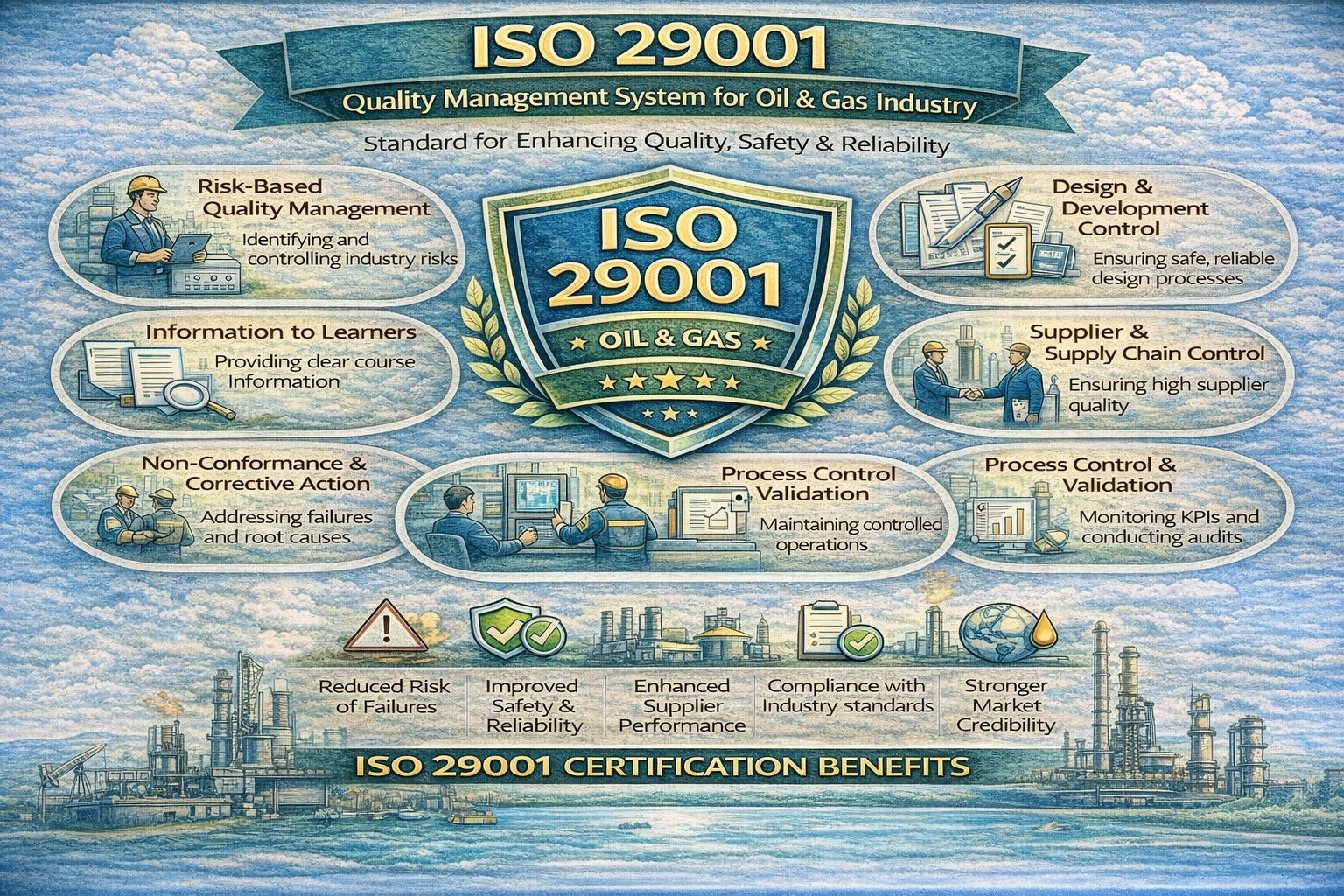
1. Risk-Based Quality Management
Identify and control risks affecting product and service quality.
2. Design & Development Control
Ensure robust design processes for safety-critical products.
3. Supplier & Supply Chain Control
Evaluate and monitor suppliers to prevent defects.
4. Process Control & Validation
Maintain controlled and validated production processes.
5. Non-Conformance & Corrective Action
Identify failures and implement root-cause corrective actions.
6. Performance Monitoring
Use KPIs and audits to monitor quality performance.
ISO 29001 Implementation Process
-
Gap analysis vs ISO 29001
-
QMS documentation and risk assessment
-
Process and supplier control implementation
-
Training and awareness
-
Internal audit and management review
-
Certification audit
Benefits of ISO 29001
-
Reduced operational and quality risks
-
Improved safety and reliability
-
Enhanced supplier performance
-
Compliance with oil & gas client requirements
-
Stronger market credibility
FAQs – ISO 29001
-
What is ISO 29001?
A QMS standard tailored for oil and gas industries. -
Is ISO 29001 mandatory?
Not mandatory, but often required by oil & gas clients. -
How is ISO 29001 different from ISO 9001?
ISO 29001 includes oil & gas-specific risk controls. -
Who should get ISO 29001 certified?
Oil & gas operators, suppliers, and service providers. -
How long does certification take?
Typically 2–4 months.