ISO 14064-1 – Organizational Greenhouse Gas (GHG) Emissions Quantification & Reporting
What is ISO 14064-1?
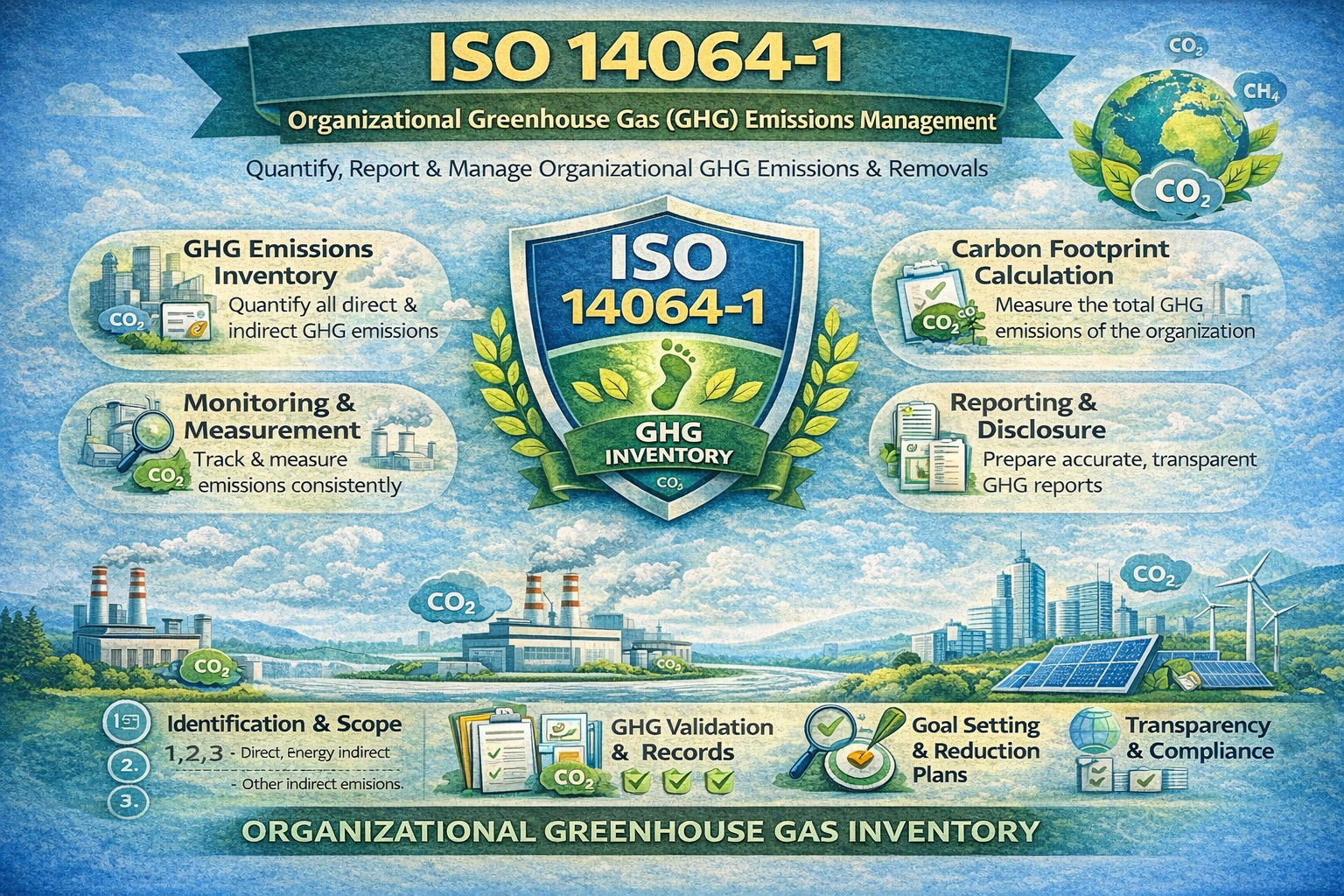
ISO 14064-1 certification is an internationally recognized standard that provides a framework for organizations to quantify, report, and manage greenhouse gas (GHG) emissions and removals at the organizational level. It enables companies to prepare a transparent and accurate GHG inventory that reflects their carbon footprint.
ISO 14064-1 is widely used by organizations aiming to meet sustainability goals, comply with regulatory requirements, and demonstrate accountability in climate change mitigation efforts.
Importance of ISO 14064-1 for Organizations
With growing global pressure to address climate change, organizations must understand and disclose their GHG emissions. ISO 14064-1 GHG emissions reporting ensures consistency, credibility, and transparency in carbon accounting.
Key objectives of ISO 14064-1 include:
-
Accurate measurement of organizational GHG emissions
-
Transparent and verifiable reporting
-
Improved emissions management and reduction planning
-
Support for sustainability reporting and ESG initiatives
-
Alignment with global climate and carbon disclosure frameworks
Scope of ISO 14064-1
Organizational greenhouse gas inventory ISO 14064-1 applies to:
-
Public and private companies
-
Manufacturing and industrial organizations
-
Service providers and institutions
-
Government bodies and NGOs
The standard covers direct and indirect GHG emissions and removals, enabling organizations to assess their complete environmental impact.
Key ISO 14064-1 Requirements
Understanding ISO 14064-1 requirements is essential for effective implementation. The standard is structured around the following core elements:
1. Organizational Boundaries
Organizations must define boundaries using either:
-
Equity share approach, or
-
Control approach (financial or operational)
This ensures clarity in determining which emissions are included in the inventory.
2. GHG Emission Sources and Sinks
Organizations must identify all relevant emission sources and removal sinks, including:
-
Direct emissions (Scope 1)
-
Indirect energy emissions (Scope 2)
-
Other indirect emissions (Scope 3, where applicable)
3. Quantification Methodology
ISO 14064-1 requires consistent and scientifically sound methodologies to quantify emissions, ensuring accuracy and repeatability.
4. Data Management and Quality Control
Organizations must establish procedures to ensure:
-
Accuracy and completeness of data
-
Consistency over reporting periods
-
Transparent assumptions and calculations
-
Traceability of emission factors and data sources
5. GHG Reporting
A comprehensive GHG report must be prepared, detailing boundaries, methodologies, results, uncertainties, and exclusions.
ISO 14064-1 Certification Process
The ISO 14064-1 certification process generally includes:
-
Gap Analysis
Review existing data and reporting practices against ISO 14064-1 requirements. -
Boundary & Scope Definition
Define organizational boundaries and emission scopes. -
GHG Inventory Development
Collect and quantify emissions data using approved methodologies. -
GHG Reporting
Prepare a documented GHG inventory report. -
Verification (Optional but Recommended)
Independent verification enhances credibility and stakeholder confidence.
Relationship with Carbon Footprint & ESG Reporting
ISO 14064-1 carbon footprint calculation is widely used to support:
-
ESG and sustainability reporting
-
Carbon disclosure programs (CDP)
-
Net-zero and decarbonization strategies
-
Regulatory and voluntary climate reporting
The standard provides a strong foundation for strategic emissions reduction planning.
Who Needs ISO 14064-1 Certification?
ISO 14064-1 is suitable for:
-
Organizations reporting corporate carbon footprints
-
Companies with sustainability or ESG commitments
-
Businesses preparing for carbon neutrality or net-zero targets
-
Organizations participating in climate disclosure initiatives
Any organization seeking credible GHG emissions management ISO 14064-1 benefits from this standard.
Business Benefits of ISO 14064-1
-
Reliable and transparent GHG reporting
-
Improved emissions control and reduction strategies
-
Enhanced stakeholder and investor confidence
-
Regulatory and market acceptance
-
Support for sustainability and climate commitments
-
Competitive advantage in environmentally conscious markets
Implementing ISO 14064-1 demonstrates strong environmental responsibility.
Why Choose ISO 14064-1 Consultancy Services?
Professional consultancy support helps organizations:
-
Select appropriate boundaries and methodologies
-
Collect and manage emissions data effectively
-
Prepare audit-ready GHG reports
-
Avoid errors and inconsistencies
-
Achieve faster and smoother certification
Expert guidance ensures accuracy, compliance, and long-term value.
Frequently Asked Questions (FAQs)
1. What is ISO 14064-1 certification?
ISO 14064-1 certification confirms that an organization quantifies and reports its GHG emissions using an internationally accepted standard.
2. Is ISO 14064-1 mandatory?
ISO 14064-1 is not legally mandatory but is widely required for sustainability reporting, ESG disclosures, and climate programs.
3. What is the difference between ISO 14064-1 and ISO 14064-2?
ISO 14064-1 applies to organizational-level GHG inventories, while ISO 14064-2 focuses on project-level emission reductions.
4. Does ISO 14064-1 include Scope 3 emissions?
Scope 3 emissions are optional but encouraged when relevant and material to the organization.
5. How long does ISO 14064-1 certification take?
Typically 2 to 4 months, depending on organization size, data availability, and complexity.