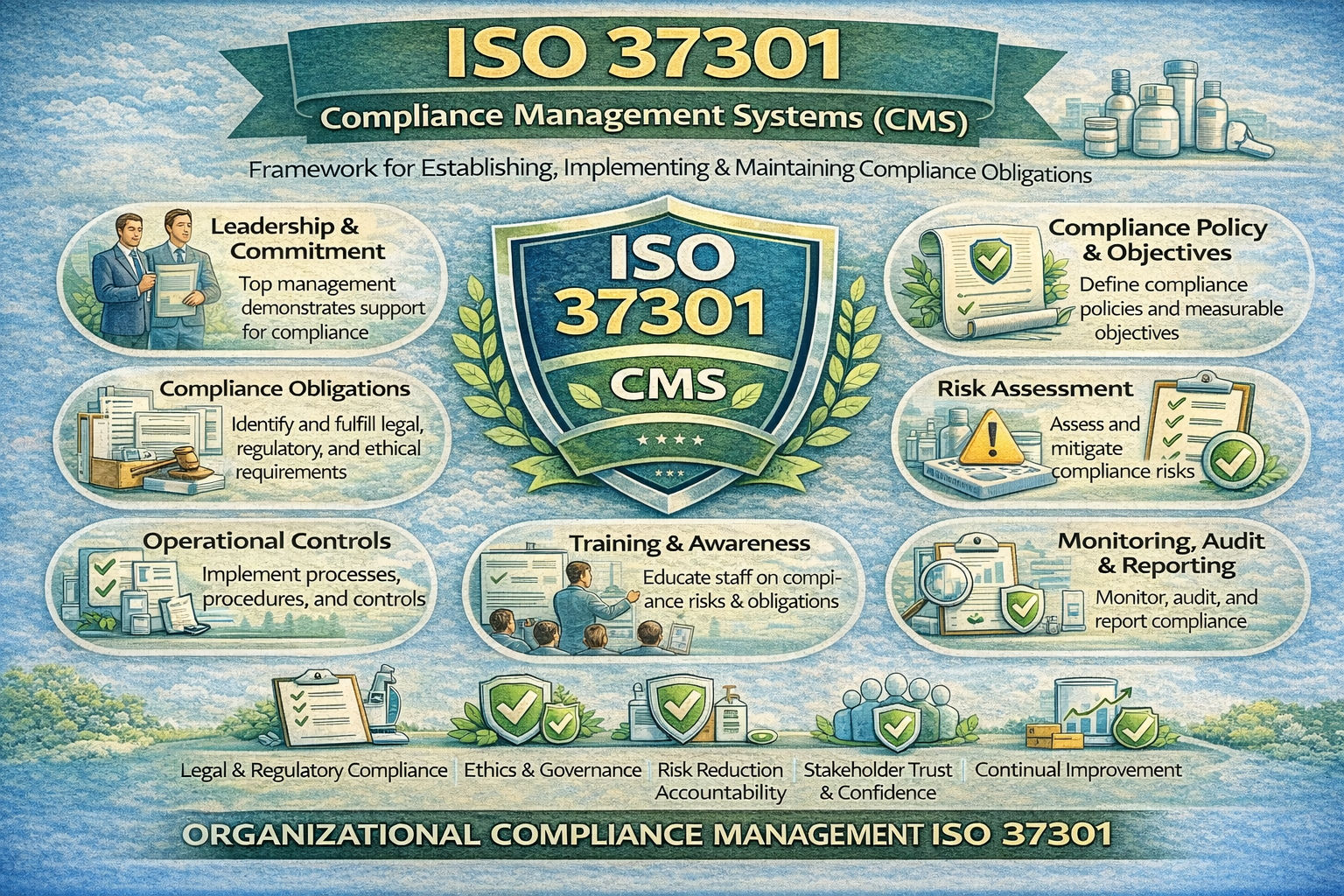
ISO 37301 – Compliance Management Systems (CMS)
What is ISO 37301?
ISO 37301 certification is an internationally recognized standard that provides a structured framework for establishing, implementing, maintaining, and continually improving a Compliance Management System (CMS). It helps organizations identify, manage, and fulfill their legal, regulatory, contractual, and ethical compliance obligations.
ISO 37301 applies to organizations of all sizes and sectors and supports a culture of integrity, accountability, and transparency. The standard replaced ISO 19600 and is certifiable, making it a powerful tool for demonstrating compliance commitment to regulators and stakeholders.
Importance of ISO 37301 Compliance Management System
In today’s complex regulatory environment, organizations face increasing risks related to non-compliance, including financial penalties, legal actions, and reputational damage. ISO 37301 compliance management system helps organizations proactively manage these risks.
Key objectives of ISO 37301 include:
-
Ensuring compliance with laws and regulations
-
Promoting ethical business conduct
-
Reducing compliance and legal risks
-
Strengthening corporate governance
-
Enhancing stakeholder confidence
An effective CMS supports long-term sustainability and responsible business operations.
Scope of ISO 37301
Organizational compliance management ISO 37301 applies to:
-
Corporations and enterprises
-
Government and public sector bodies
-
Financial institutions
-
Healthcare and pharmaceutical companies
-
Manufacturing and service organizations
-
NGOs and non-profits
The standard is flexible and can be integrated with other management systems such as ISO 9001, ISO 14001, ISO 27001, and ISO 37001.
Key ISO 37301 Requirements
Understanding ISO 37301 requirements is essential for successful implementation. The standard is based on the Plan-Do-Check-Act (PDCA) cycle and includes the following core elements:
1. Leadership & Commitment
Top management must demonstrate commitment to compliance by establishing policies, assigning responsibilities, and promoting a compliance culture.
2. Compliance Policy & Objectives
Organizations must define a compliance policy aligned with their values, risks, and obligations, supported by measurable objectives.
3. Compliance Obligations
All applicable legal, regulatory, contractual, and voluntary obligations must be identified, documented, and monitored.
4. Risk Assessment
Compliance risks must be identified, analyzed, and evaluated to determine appropriate controls and mitigation measures.
5. Operational Controls
Processes and procedures must be implemented to ensure compliance is embedded in daily operations.
6. Training & Awareness
Employees and relevant stakeholders must receive appropriate compliance training and awareness programs.
7. Monitoring, Audit & Reporting
Organizations must monitor compliance performance, conduct internal audits, and report non-compliance incidents.
8. Continuous Improvement
Corrective actions and management reviews must be conducted to improve the CMS continually.
ISO 37301 Certification Process
The ISO 37301 certification process generally includes:
-
Gap Analysis
Assess current compliance practices against ISO 37301 requirements. -
CMS Design & Documentation
Develop compliance policies, procedures, risk registers, and controls. -
Implementation & Training
Roll out the CMS and train employees. -
Internal Audit & Management Review
Verify system effectiveness and readiness. -
Certification Audit
External audit by an accredited certification body.
Who Needs ISO 37301 Certification?
ISO 37301 is ideal for:
-
Organizations operating in regulated industries
-
Companies with complex legal obligations
-
Businesses seeking strong governance frameworks
-
Organizations aiming to reduce compliance risks
-
Enterprises building trust with regulators and investors
Any organization seeking structured ISO 37301 CMS implementation benefits from this standard.
Business Benefits of ISO 37301
-
Reduced legal and regulatory risks
-
Improved governance and accountability
-
Strong ethical and compliance culture
-
Enhanced stakeholder and regulator trust
-
Better decision-making and transparency
-
International recognition and credibility
ISO 37301 demonstrates an organization’s commitment to lawful and ethical operations.
Why Choose ISO 37301 Consultancy Services?
Professional consultancy support helps organizations:
-
Identify and interpret compliance obligations
-
Design an effective CMS framework
-
Train staff and compliance officers
-
Reduce audit findings and non-compliances
-
Achieve faster and smoother certification
Expert guidance ensures practical and sustainable compliance systems.
Frequently Asked Questions (FAQs)
1. What is ISO 37301 certification?
ISO 37301 certification confirms that an organization has implemented an effective Compliance Management System to meet its obligations.
2. Is ISO 37301 mandatory?
ISO 37301 is not legally mandatory, but it is widely adopted to demonstrate strong compliance and governance practices.
3. What is the difference between ISO 37301 and ISO 19600?
ISO 19600 was a guidance standard, while ISO 37301 is certifiable.
4. Can ISO 37301 be integrated with other ISO standards?
Yes, ISO 37301 integrates easily with ISO 9001, ISO 14001, ISO 27001, and ISO 37001.
5. How long does ISO 37301 certification take?
Typically 2–4 months, depending on organization size and compliance maturity.